Dedicated to the manufacture of potentiometers, encoders, switches and sensors

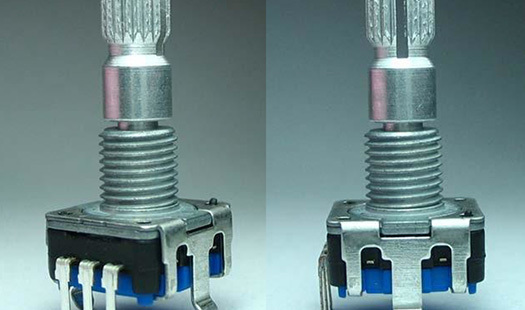
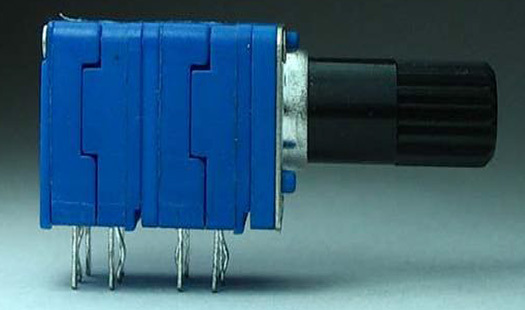

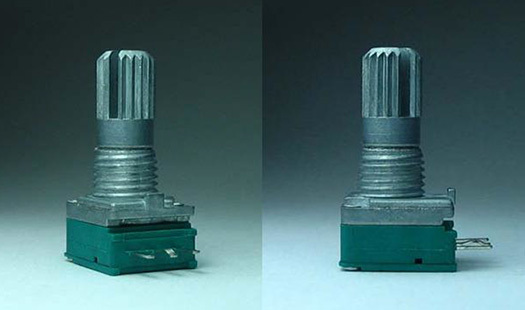
Discovering the Optimal Rotary Potentiometer for Your Applications
Mar 16,2025
When it comes to selecting the best potentiometer rotary for your electronic applications, several critical factors come into play. Potentiometers are variable resistors that can adjust voltage and current in a circuit, making them essential components in various electronic devices. Understanding the different types of rotary potentiometers and their functionalities will significantly enhance your
When it comes to selecting the best potentiometer rotary for your electronic applications, several critical factors come into play. Potentiometers are variable resistors that can adjust voltage and current in a circuit, making them essential components in various electronic devices. Understanding the different types of rotary potentiometers and their functionalities will significantly enhance your design process.
First and foremost, consider the resistance value of the potentiometer. Resistance values can vary widely, typically ranging from a few ohms to several megohms. Selecting the appropriate resistance value is crucial for ensuring compatibility with the circuit you are designing. A potentiometer with a resistance that is too low or too high can lead to performance issues or even circuit failure.
Another important aspect is the physical size and form factor of the rotary potentiometer. Depending on your application, you may require a compact potentiometer that fits into tight spaces or a larger one that can handle higher power loads. Additionally, the shaft length and type (e.g., knurled, smooth, or with a D-shaped fitting) should match the design of your device for seamless integration.
The taper of the potentiometer is also an essential consideration. There are generally two types of taper: linear and logarithmic. Linear potentiometers provide a consistent change in resistance over the entire range of motion, while logarithmic potentiometers are better suited for audio applications, where human perception of sound changes logarithmically. Choosing the correct taper will ensure more intuitive control over the variable parameters in your circuit.
Moreover, the durability and lifespan of the potentiometer cannot be overlooked. Look for potentiometers that have reliable mechanical and electrical specifications. Check for ratings such as rotation life and temperature tolerance, as these factors will influence how well the component performs under different operating conditions.
Lastly, pay attention to the mounting style. Rotary potentiometers can be panel-mounted, through-hole, or surface-mounted. Your choice will depend on how you intend to integrate the potentiometer into your device and the assembly process you plan to use.
In conclusion, the best potentiometer rotary for your application will depend on a combination of resistance value, physical attributes, taper type, durability, and mounting style. By carefully considering these factors, you can select a potentiometer that not only meets the technical requirements of your project but also enhances the overall user experience. Understanding the nuances of potentiometer selection can lead to improved functionality and reliability in your electronic designs.
More Information
More Information
RECOMMENDED

Request Quote
Mobile: +86-13902648085
Email: tq@tianqiandz.com
Whatsapp: +86-19939624301
website: https://en.tianqiandz.com/


Request Quote